

The Rise of Email Scams
Email remains the lifeline of modern business communication, but it is also the top doorway for cybercriminals. Every year, organizations of all sizes fall victim to scams that start with a single email. These aren’t just “spam” messages you can ignore; they’re carefully crafted attacks designed to trick employees into sending money, handing over login credentials, or exposing company data. In this post, we’ll walk through the most common types of business email scams and how you can protect your organization.
Why Email Scams Target Businesses
Scammers go after businesses for one simple reason: there’s more money to be made. An employee in finance or human resources often has access to sensitive systems or company funds. Add in the fact that most employees are busy and trust email communication, and scammers have the perfect recipe for success. The attacker only needs one person to click or respond, and the damage can be costly.
Invoice Fraud
Invoice scams target accounts payable departments by sending fake bills that look like they came from a legitimate vendor. These invoices often have just enough real details like a familiar company name or formatting to slip past a rushed review. The result of this is that payments end up in the scammer’s bank account instead of your supplier’s. Red flags include invoices for services never rendered, slightly altered email addresses, or changes in payment instructions.
CEO Fraud / Business Email Compromise (BEC)
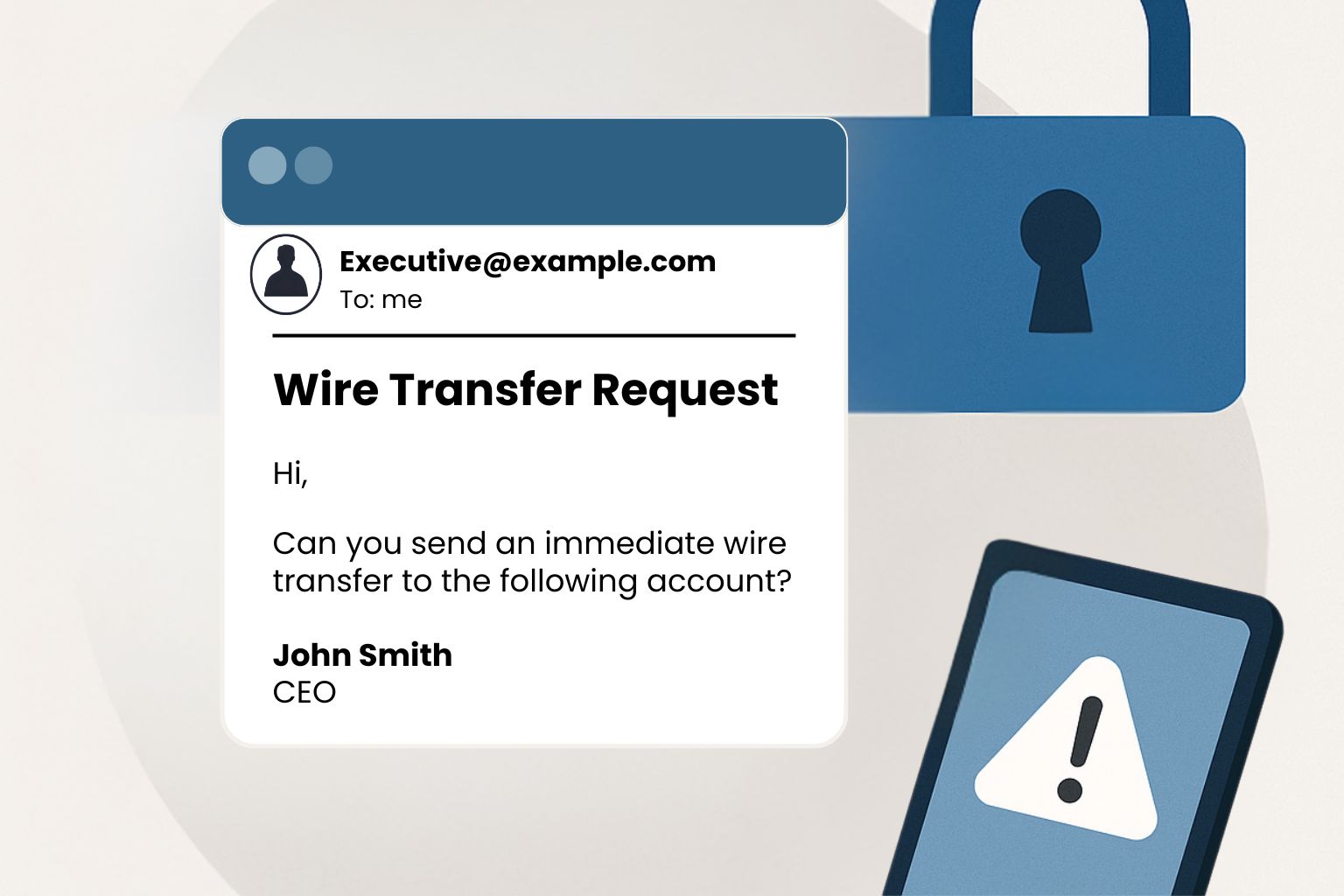
Also known as “CEO fraud,” this scam involves impersonating an executive or manager to pressure an employee into wiring money or sharing sensitive information. Attackers often write with urgency: “I need this taken care of immediately” or “Do not discuss this with anyone else.” These messages prey on an employee’s loyalty and sense of responsibility. A quick phone call or internal check could expose the scam, but many victims don’t pause to verify in time.
Fake Gift Card Scams
This type of scam is surprisingly common. Employees receive emails that appear to come from leadership asking them to buy gift cards “for client appreciation” or “as a surprise for staff.” The scammer then requests the employee scratch off the cards and send the codes via email. Once the codes are sent, the money is gone. Legitimate leaders don’t handle employee rewards this way, and any gift card request that bypasses standard expense procedures should be treated with suspicion.
Payroll Diversion and HR Scams
In these attacks, scammers impersonate employees and ask HR to change direct deposit information. Paychecks are then routed to the attacker’s account. Others target HR departments directly, requesting employee tax forms or sensitive data for identity theft. Because HR teams often deal with confidential information, these requests can seem routine unless the details are checked carefully.
Vendor / Supply Chain Impersonation
Some of the most convincing scams involve impersonating vendors or partners. Attackers might send an email claiming that banking details have changed or that a new account should be used for payment. Since many businesses rely on recurring vendor relationships, these requests can slip through if verification steps aren’t in place. Always double-check payment changes through a trusted channel, not just email.
How to Protect Your Business
Stopping email scams takes more than just good spam filters. It requires a layered approach:
– Cybersecurity awareness training: Employees must know what red flags to look for.
– Email security tools: Firewalls and advanced filtering block many fraudulent messages before they hit inboxes.
– Multi-Factor Authentication (MFA): Even if passwords are stolen, MFA makes it harder for attackers to gain access.
– Approval processes: Financial and payroll changes should always require secondary verification.
– Partner with a trusted IT provider: Cross Link Consulting provides managed IT services, cybersecurity protection, and co-managed IT support to help businesses stay secure.
Why Cross Link Consulting Can Help
At Cross Link Consulting, we faithfully serve as a trusted IT partner for businesses and local governments across the CSRA. Our cybersecurity awareness training equips your employees to spot scams before they cause harm. We also provide advanced security tools, vCIO strategy, Microsoft support, and co-managed IT services that keep your systems safe and your team confident. Whether you’re a financial institution, government office, or small business, we’ll stand alongside you with the protection and support you need.
Protect What Matters
From fake invoices to gift card requests, business email scams are more common than ever. The good news is that with the right training, technology, and IT partner, you can stay one step ahead. If you want to safeguard your business and give your employees peace of mind, reach out to Cross Link Consulting today. We’ll help you build defenses that protect your company, your data, and your people.