

A Closer Look at the Gaps That Put Businesses at Risk
We talk with a lot of business owners, office managers, finance teams, and local government leaders across the CSRA, and most of them tell us about the same thing at first. They feel confident about their cybersecurity because they have antivirus, a firewall, or someone they can call when something breaks.
But when we sit down together and take a closer look, a different picture usually appears. Not because anyone has done anything wrong, but because security has changed so quickly that it is hard to keep up unless you are watching it every day.
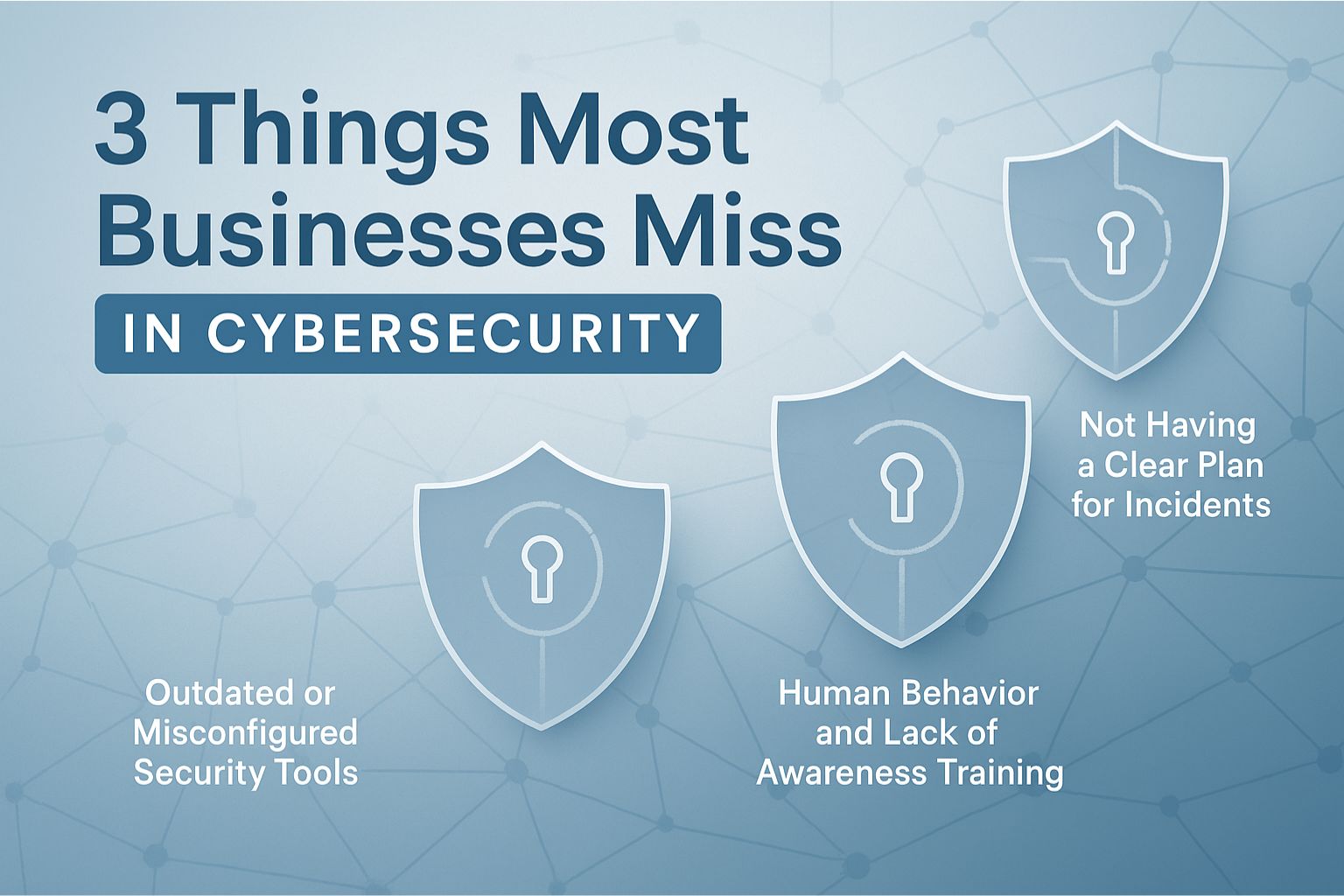
Over time, we started noticing the same three gaps, showing up repeatedly. They are small things, but they have a big impact on security when they are overlooked. Our goal here is simply to share what we see so you can take a clearer look at your own environment.
The First Miss: Outdated or Misconfigured Security Tools
Most people assume their security tools are doing their job in the background. We get it. You install software, trust that it is running, and move on with your day. The problem is that tools need to be updated and checked on just like anything else. They fall behind. Settings drift. Alerts get missed. Sometimes something breaks quietly without anyone noticing.
And attackers depend on that. They spend a lot of time looking for old versions, missing patches, and forgotten systems. Even one overlooked server or workstation can be the open door someone is hoping to find.
Why This Matters More Than Ever
Whether it is a small bank, a CPA firm, a local government office, or a growing business, many of the systems in use today were never designed for the threat landscape we have now. Add in aging software or updates that never seem to run at the right time, and you end up with weak points that are easy to miss.
How We Approach This with Stewardship
The way we look at security is pretty simple. If a tool is protecting your business, then we need to make sure it is truly doing its job. We treat monitoring and patching as daily responsibilities because that is what keeps your environment safe and predictable. Our hope is that you feel taken care of without needing to chase details or hope everything is fine.
The Second Miss: Human Behavior and Lack of Awareness Training
If we had to point to the number one reason businesses get compromised, it would not be a technical failure. It would be a person who clicked on something they thought was safe.
People do not make mistakes because they are careless. They make them because threats are incredibly convincing now. A phishing email can look exactly like a real one. A link can look harmless. A request for information can sound legitimate.
Without training, employees are left trying to guess.
Real-World Risks from Everyday Mistakes
We have seen teams fall victim to attacks that started with:
• A single click in an email
• A password that was easy to guess
• Someone sharing just a little too much online
These things happen every day, even to smart and capable people.
Training Builds a Stronger, More Faithful Culture of Security
When people understand what to look for, their confidence grows. They ask better questions. They slow down before clicking on something. They feel more responsible for protecting the organization. Training is not about fear. It is about equipping people and reminding them that security is everyone’s job, not just IT’s.
The Third Miss: Not Having a Clear Plan for Incidents
This one surprises people the most. Many businesses think that if something major happens, they will figure it out in the moment. But when the moment hits, everything moves too fast.
A ransomware attack. A server outage. A stolen device. A breached email account. None of these are good times to start planning.
What Happens When There Is No Plan
When there is no clear plan, teams end up scrambling. They wonder who to call, which systems to shut down, how to recover data, or who needs to be notified. Emotions run high, and decisions get harder.
Building a Plan That Actually Works
A good incident response plan is less about paperwork and more about clarity. It should answer the important questions and give your team confidence instead of panicking. When we help clients build plans, we focus on keeping them simple, practical, and easy to follow even on a stressful day.
Bringing It All Together: Cybersecurity Built on Stewardship and Care
Cybersecurity has never been about spinning up fear or selling more tools. At its heart, it is about taking care of people and making sure your business can continue serving your clients and community without interruption.
When we partner with a business, we take that responsibility seriously. Our team sees this work as a form of stewardship, and we are grateful for every opportunity to help someone operate more securely and confidently.
If these three areas made you pause, that is a good thing. It means you are paying attention. And if you ever want help taking a deeper look at your environment or strengthening your security, we are here to walk with you.