

Simple Ways Businesses Can Strengthen Cybersecurity and Reduce Risk
The Hidden Risk Most Businesses Overlook
When most people think about cybersecurity, they picture ransomware, hackers, or major data breaches making headlines. What many businesses miss is that cybercriminals usually do not begin with sophisticated attacks. They often begin with small openings that were overlooked.
- A browser extension
- An unused employee account
- An outdated application
- A shared password
- An old laptop that never got removed from the network
These things may seem harmless on their own, but together they create what cybersecurity professionals call an attack surface. The larger your attack surface becomes, the more opportunities an attacker has to gain access to your business.
What “Attack Surface” Really Means
The easiest way to understand attack surface is to picture your business as a building.
Every door, window, garage entrance, and side entrance creates another possible way for someone to enter the building. Cybersecurity works much the same way.
- Devices
- Applications
- Browser extensions
- Cloud services
- Login accounts
- Employee permissions
Browser Extensions Are More Powerful Than Most People Realize
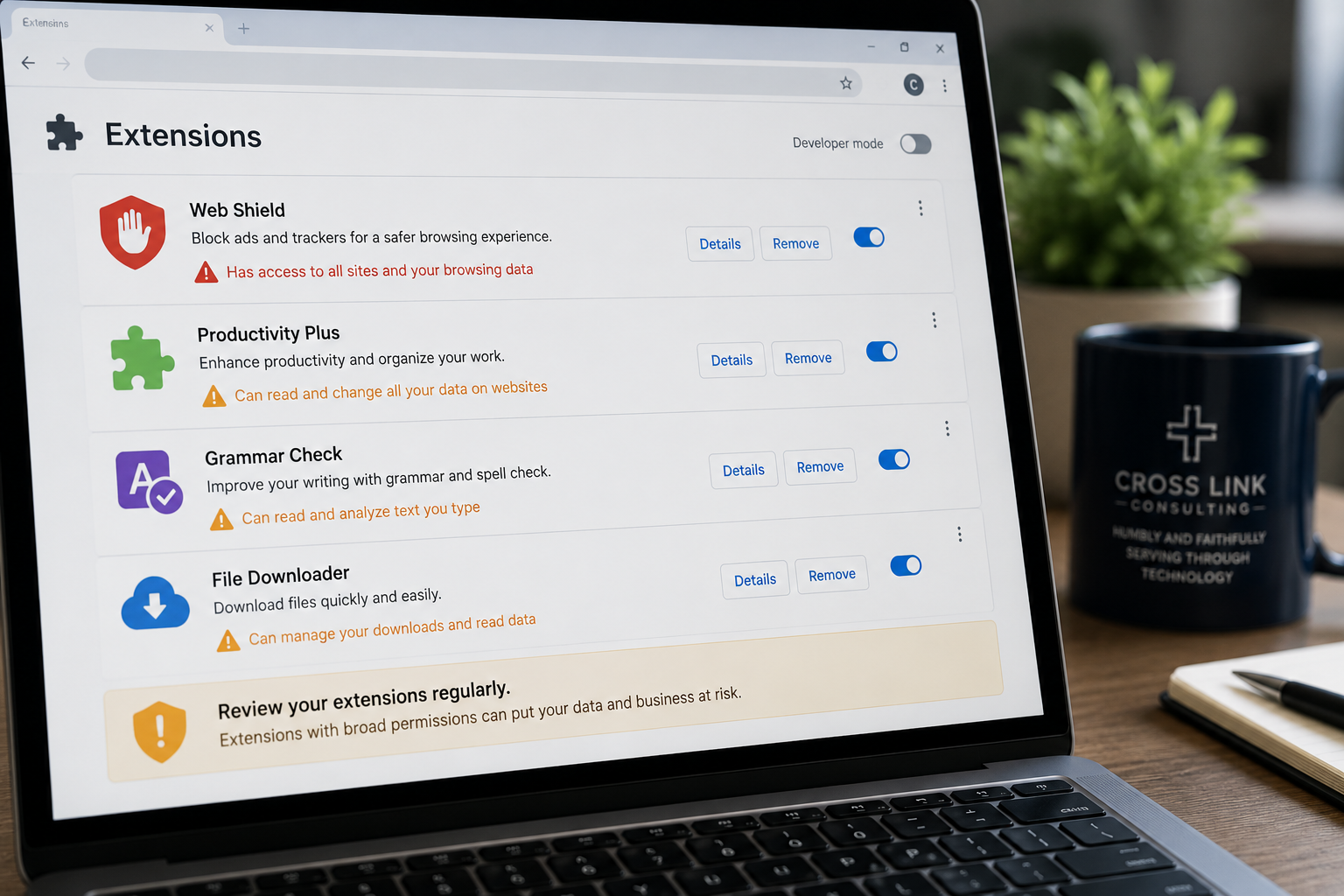
Browser extensions have become incredibly common in modern workplaces. Employees install them to improve productivity, block ads, check grammar, save passwords, organize tabs, or integrate with online tools.
The challenge is that many browser extensions request extremely broad permissions.
Some Extensions Can
- Read everything you type
- Access browser sessions
- View websites you visit
- Read emails and form submissions
- Capture authentication tokens
- Track browsing behavior
Old Accounts and Unused Software Create Silent Vulnerabilities
One of the most common security issues we see is technology that nobody remembers is still there.
Former employees still having active accounts is incredibly common. Unused remote access software is another major concern.
Practical Ways To Reduce Your Attack Surface
Review Browser Extensions Regularly
Remove extensions employees no longer use and evaluate whether current extensions truly need the permissions they request.
Remove Unused Software
If applications are no longer needed, uninstall them completely.
Disable Old User Accounts
Immediately disable accounts for former employees, vendors, or contractors who no longer require access.
Limit Administrative Access
Administrative privileges should be carefully controlled and monitored.
Keep Systems Updated
Patching vulnerabilities remains one of the most important cybersecurity practices businesses can follow.
Use Multi-Factor Authentication
Even if credentials become compromised, MFA adds another layer of protection.
Provide Cybersecurity Awareness Training
Employees are often the first line of defense. Helping staff recognize risks creates a much stronger security culture.
Why Attack Surface Reduction Is About Stewardship
At Cross Link Consulting, we believe cybersecurity is ultimately about stewardship.
Businesses are entrusted with client information, financial records, employee data, and operational systems that people rely on every day.
Protecting those systems is not simply a technical responsibility. It is part of faithfully serving others well.
A Safer Business Starts With Small Decisions
Strong cybersecurity is rarely built through one dramatic change. More often, it is built through consistent attention, faithful stewardship, and proactive habits over time.
At Cross Link Consulting, we faithfully serve businesses throughout the CSRA with Managed IT Services, co-managed IT, cybersecurity protection, and vCIO guidance designed to help organizations reduce risk while staying productive and secure. If you’re ever unsure or need more support, Cross Link Consulting is always here to help.